If there is one word that defines this year at MSI, it is resilience. Shifting policies, funding cuts, growing barriers to care: the headlines throughout 2025 made it clear that MSI was going to need to dig deep. And true to form, that’s what we did.
I was reminded of this when I heard about one of our outreach teams that got trapped in deep mud on their way to a remote community near Lukusuzi National Park in Zambia. With no cell service and the possibility of predatory wildlife lurking in the brush, they spent a long, sleepless night in their truck, waiting to be found.
When help finally came the next day, they didn’t turn back. They continued on to their destination, and provided reproductive healthcare to dozens of women who otherwise would have had none.
This story was told as if it were routine. At MSI, in many ways, it is. But for me, it was a powerful reminder of what resilience truly looks like: not just enduring hardship, but pushing forward with purpose, no matter the obstacles.
We see that resilience in you.
You have stood with MSI through moments of uncertainty and transformation. You understand that progress is rarely smooth. It comes in starts and stops and requires persistence, courage, and belief in what’s possible.
Because of you, MSI teams don’t stop when the road washes out, literally or figuratively. Because of you, they reroute, reorganize, and keep going. Because of you, millions of women and girls are able to make choices about their own bodies and their own futures.
In a year that tested so much, your partnership made something extraordinary possible: more women reached, more services delivered, and more lives changed than ever before in our history.
That is resilience in action.
I hope you will enjoy reading about the many triumphs you made possible. Thank you for standing with us, for believing in this work, and for making it possible, again and again.
With gratitude,

President, MSI United States


Since 1976, MSI has proudly supported nearly 300 million people to make their own reproductive choices. Over 50 years, that would be the equivalent of providing someone with life-changing reproductive healthcare every five seconds.
-Eric, MSI health provider in a mobile health team, Burkina Faso
women’s and girls’ lives saved
1976
Founded
—
2001
1,000 lives saved/year
2025
42,000 lives saved/year
42× growth
unintended pregnancies prevented with MSI’s support
1976
10,000
2001
640,000
2025
18,600,600
unsafe abortions prevented
1976
100
2001
450,000
2025
9,700,000
estimated direct healthcare costs saved
1976
—
2001
$42.9 million
2025
$1.3 billion
Reproductive healthcare is preventative ‘up-stream’ healthcare helping women avoid unintended pregnancy, pregnancy-related issues, and complications from unsafe abortions. It takes significant pressure off health systems and saves healthcare costs.
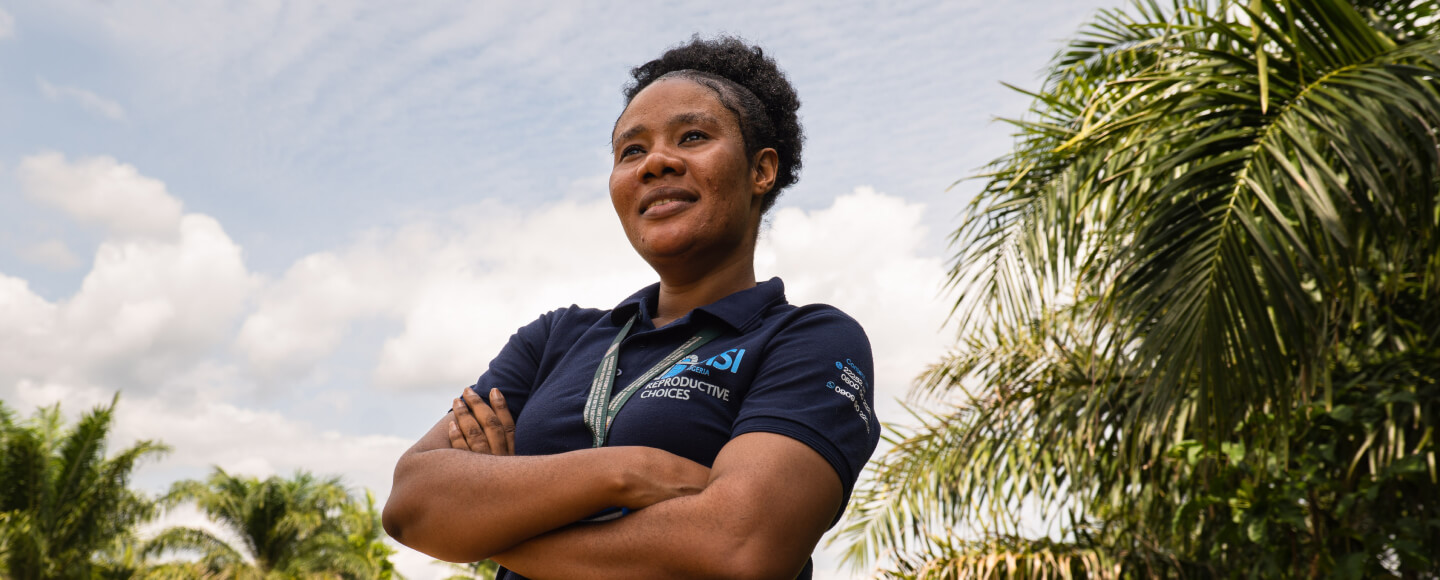
IFEOMA ONYEKACHI
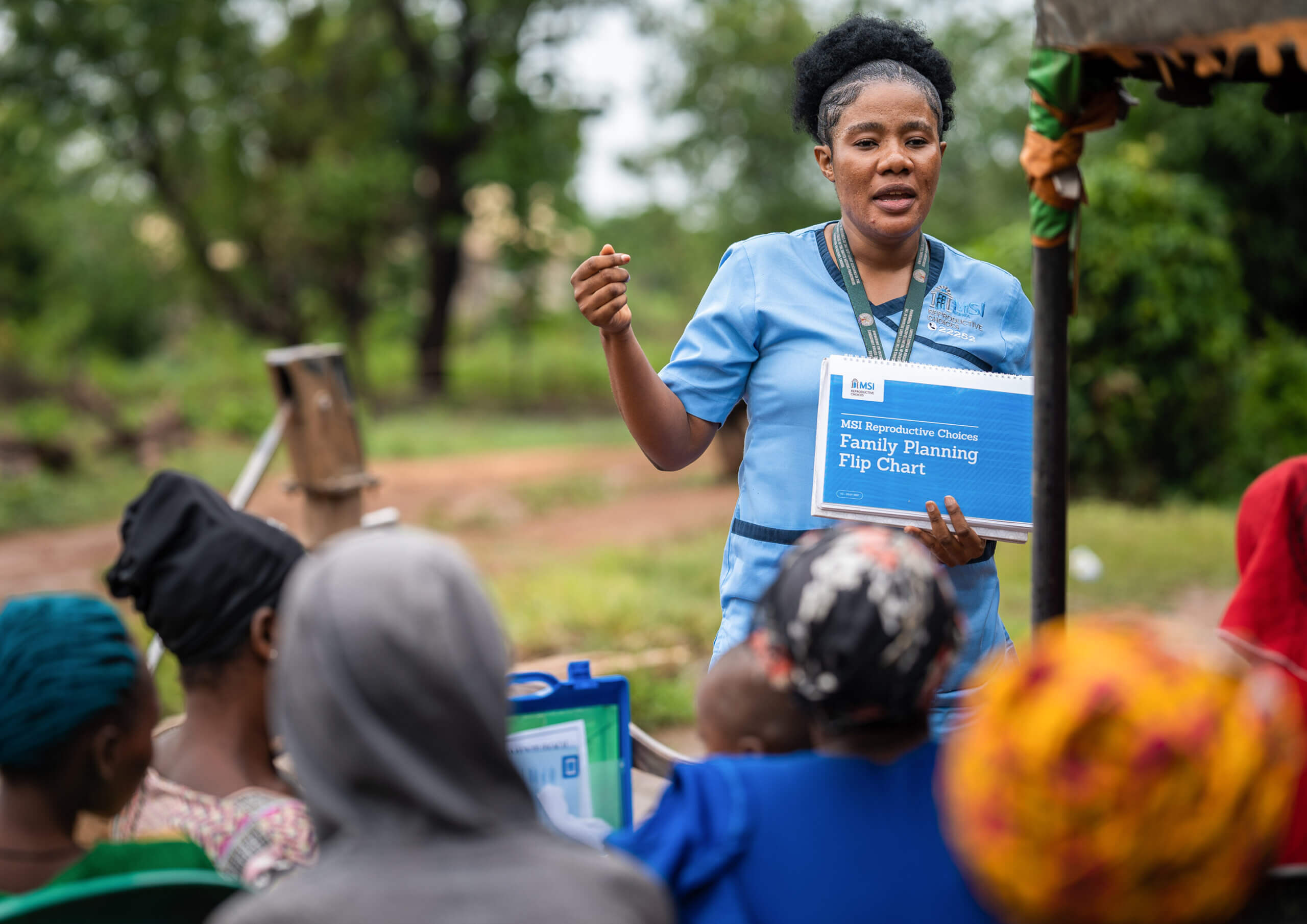
MSI Nigeria nurse Ifeoma ‘Ify’ Onyekachi leads an outreach team that travels into remote communities to support people with contraception. Here’s a day in her life:
7:03am. The unforgiving sun is already blazing. Nurse Ify in blue scrubs, her hair tied back, is packing equipment into a white Toyota 4×4, making sure her team has everything they need before they set out.
And the journey begins.
Over time, the busy streets become increasingly empty, the smooth terrain surrenders to rust-red muddy ground. Electricity lines came to an end a while back. Maneuvering around large potholes, the car is jolting and everyone inside it is being tossed around.
“I don’t like my job – I love it. The hardest part is the difficult journeys… crossing rivers, passing through harsh landscapes. Sometimes the car gets stuck in deep mud and we have to dig it out. But once you get there and see smiles on faces, you forget about it.”
Two hours after setting off, they arrive at a community. Tucked into surrounding farmland, you’d never have known it existed. Brightly patterned clothing and headscarves are worn by community members who chant and drum to welcome the MSI team, an excitable energy rising among the crowd.
Interested faces stare as Ify greets them warmly and reaffirms why MSI is here today: to provide contraception for anyone who wants it.
The building where they’re setting up is a public health facility that doesn’t have the staff or supplies to provide contraceptive options in this area.
“The local government are in full support of what we do. We’re reaching those rural places that, if we didn’t, would not have any reproductive health services. There’s no public infrastructure to make that possible right now.”
Having now set up for the day ahead, Ify finishes a group health talk and a few people ask questions. Everyone has been listening intently, disrupted only by nearby goats bleating and birds chirping in the surrounding forest.
The MSI team starts to welcome people inside for private appointments, so clients can choose a method of contraception that suits them.
Nurse Ify’s first client of the day is Adadechei: a 19-year-old who heard about MSI’s services from village announcements. She dropped out of secondary school to raise her young son. She is here today because she wants to make it back to school and on to university. She wants to show there’s still life after giving birth. After discussing her options with Ify, she opts for her first contraceptive implant and leaves with a huge smile, her future wider than before.
Then Ify meets Glory, a 32-year-old mother of nine who wants a break from giving birth. Glory says she’s seen many people that contraception has favored, and that’s why she has come here today. She wants more time to make money and to care for her children.
Ify delivers contraceptive counseling and services with the finesse and quality required of her, and a kindness that is innate. As the day wears on, her team works seamlessly to register clients on the system, support people with services and make sure everyone is heard and respected.
At the end of the day they come together to pack everything up and Ify finds an opportunity to dance with some community members.
“People say are you not tired at the end of the day? Nah, the more you dance, the more energy you have!”
Ify doesn’t have to wonder if her hard work is changing lives. She finds the effects of her work all around her. In the teenager who walks past her in school uniform, holding textbooks and laughing with her friends. In the woman who she sees has opened a stall at the local market, pocketing the profits to support her family.
Her team departs, beginning the long drive back. They leave knowing that their work today has sparked a rippling effect of change and hope for many families. And they’ll do it all again tomorrow
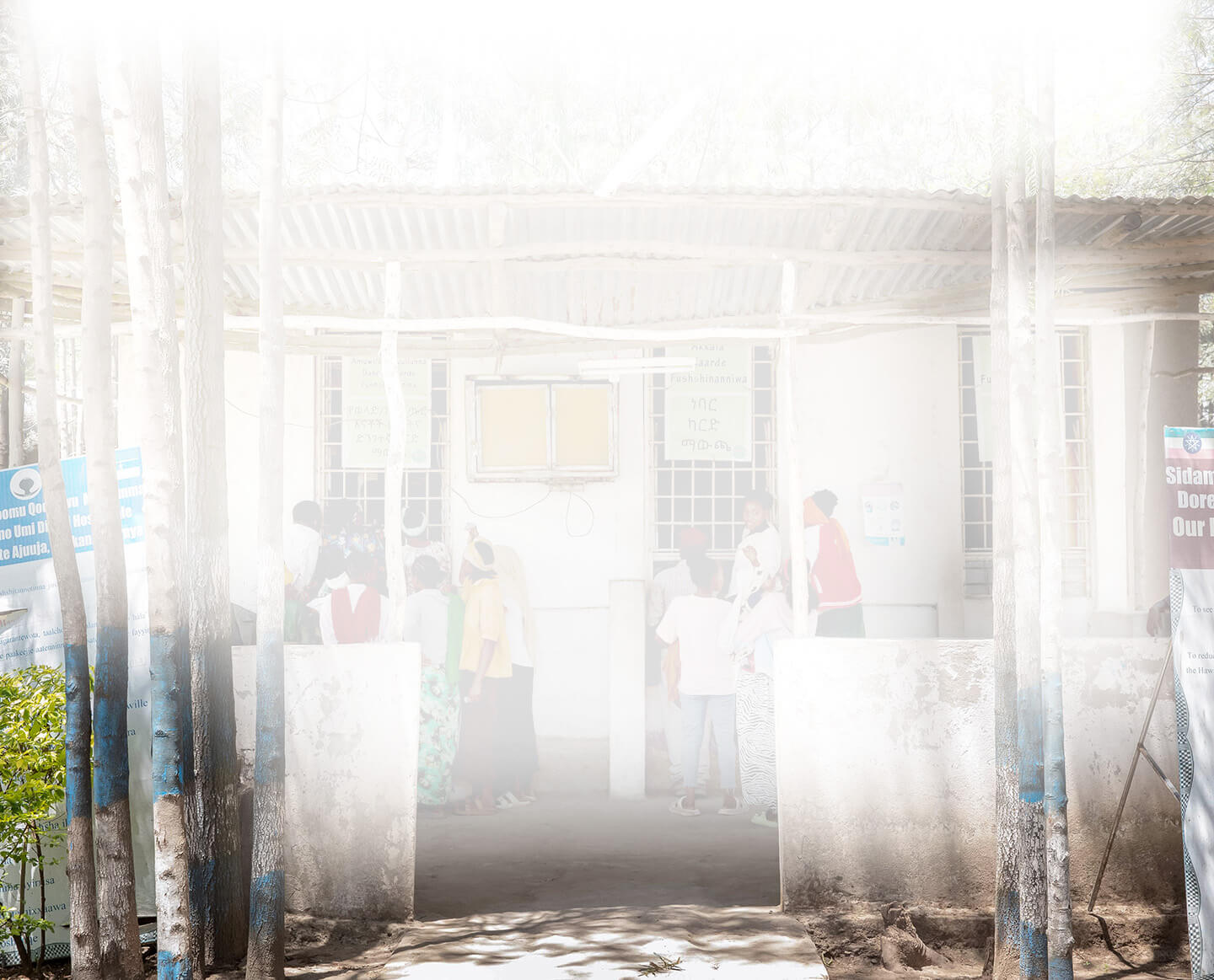
2025 marked 20 years since Ethiopia liberalized abortion. Dr Wasihun Alemayehu has provided abortion throughout these two decades in cities, remote villages and public hospitals. Now working as MSI Ethiopia’s clinical quality director, he recounts the incredible changes he’s seen.
It was the early 2000s and I was in medical school in Ethiopia. Abortion wasn’t yet legal. I remember there were hospital wards – septic wards they called them – dedicated to helping women and girls who’d had unsafe abortions.
There were lots of untrained people who would promise to end people’s pregnancies, but they just wanted to make money. They’d insert objects like wood or metal sticks into wombs causing severe infections, uterus damage, organ failure. Countless women and girls died. It became our normal.
I especially remember Fridays. Whoever was on duty on Fridays would always have a sleepless night and deal with tragic, complicated cases, because that’s when the students came. High school students thought they would end their pregnancy on a Friday, heal up over the weekend and by Monday they’d be ready to go back to school. Many never saw their families again, let alone the classroom.
I never set out to work in the field of reproductive health. But when I was sent to a rural community as a young graduate from medical training, all I could see was women suffering. And so I knew where I was needed – and I joined obstetrics and gynecology with my whole heart, to be part of the solution.
Thankfully in 2005, a year after I graduated, a new law was introduced which allowed safe abortion services. The government had finally responded to the public health crisis.
Miracles didn’t happen overnight. There was a lot of work that went into its implementation, including changing the attitudes of healthcare providers and educating people of their right to have an abortion.
But 20 years on from that law reform, the changes I’ve witnessed have been nothing short of phenomenal. If you go into an Ethiopian hospital now, you won’t find ‘septic wards’ anymore – they’re no longer needed.
Maternal deaths have reduced by 70%. I’ve witnessed so many young women joining college and having better opportunities in life.
It was only when I joined MSI that I learned that there are campaigns and groups trying to ban abortion in this country again. They’re attempting to devalue the changes our country has seen, saying the law to liberalize abortion was imposed on us, that it’s wrong. What nonsense. The law passed after lots of campaigning from Ethiopian civil society. It was based on objective data and a goal to prevent unnecessary deaths – and it’s been a massive success. Even if you forget about the data, there are people like me who have witnessed the progress right before my eyes. These anti-abortion groups are simply denying reality. To drag us back to where we were twenty years ago is unjustifiable.
I have worked in cities, in remote villages, in public hospitals, in private practice, and now with MSI – I’ve seen all types of women and situations.
My work gives me a sense of shouldering the responsibility and the burden that women face. When someone comes to me for an abortion, it’s not always easy for them – they’re dealing with something unplanned, perhaps they’ve experienced sexual violence or struggled with their decision.
Their choice and whatever is going on for them should be understood and respected. Politics, systems and their community aren’t always supportive. But I can be.
Donations and legacies: $11.8M
Grants from trusts and foundations: $116.2M
Grants from governments: $71.6M
For just $5.00, you can provide someone their choice of contraception for a year, giving them control over their future.