


Reproductive Healthcare in Afghanistan
Ensuring Care Remains Available
In Afghanistan today, delivering healthcare to women requires creativity, patience, and determination.
Restrictions on women’s and girls’ access to education have created an urgent challenge for the country’s health system. Many women who were studying to become nurses, midwives, or other medical professionals were forced to stop their training before finishing their degrees. At the same time, Afghanistan’s health system relies heavily on female providers. Cultural norms mean many women can only seek care from other women—especially for reproductive and maternal health services.
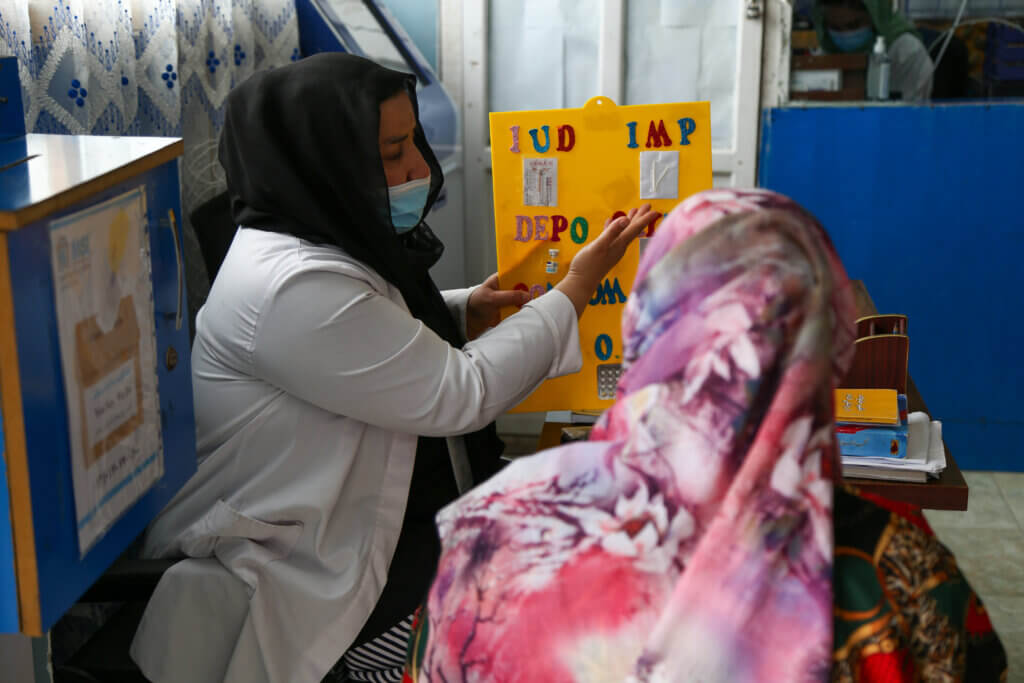
Speaking from MSI’s center in Kabul, Afghanistan, MSI Country Director Dr. Muslih said: “Without enough trained female providers, lifesaving reproductive healthcare would simply vanish for women in Afghanistan and more women would die without it. We couldn’t let that happen.”
That’s why MSI teams in Afghanistan turned to an innovative approach to keep women’s healthcare moving forward, even in a difficult environment.
In the spring of 2024, MSI launched a program that offers clinical internships to women who were forced to pause their medical education.
Many of these women were in their final year of study when the restrictions took effect. They already had foundations in infection prevention and emergency care. Between April 2024 and August 2025, 130 women in the internship program received training and support from experienced MSI Reproductive Choices providers. The program prepares them to move into clinical and non-clinical roles at MSIA centers in Balkh, Herat, Kabul, Kandahar, and Nangarhar provinces.
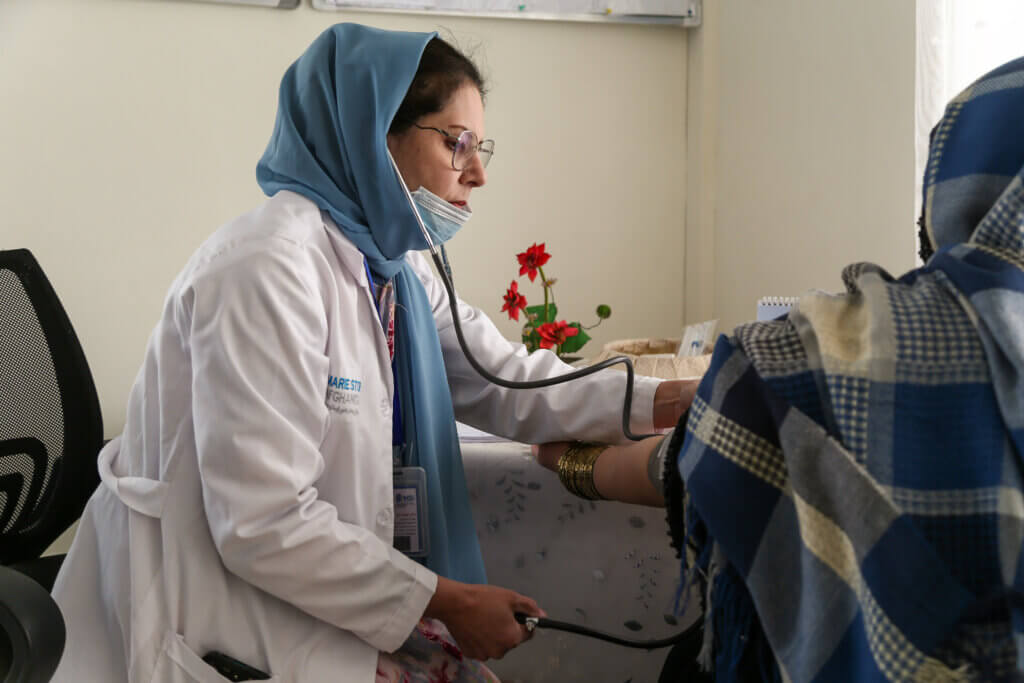
Over the course of the program, these interns sharpened their clinical skills while learning to meet MSI’s high standards for patient care. At the end of the placement, they were formally assessed. The majority of interns achieved the required standards and received certification, allowing them to continue delivering family planning and reproductive healthcare, either with MSI or with other organizations.
Of the 130 interns, 26 went on to secure roles with MSI Afghanistan at the end of their internships. At least six others have secured roles with other organizations.
The impact is immediate and practical
Each new trained provider means more women can safely space their births, and access maternal healthcare, and other essential services. In places where travel is difficult and health systems are fragile, the presence of a skilled female provider can make the difference between receiving care—or going without it entirely.
Haya, an MSI Lady in northern Afghanistan, says: “In Afghanistan, women can feel restricted in what they can share on their health and relationships with male doctors, so as a woman, I wanted to help these women, particularly vulnerable women, with no other access.”
This approach is not a permanent solution. Over time, the pipeline of women who nearly completed their medical studies will disappear, and new pathways for training providers will be needed.
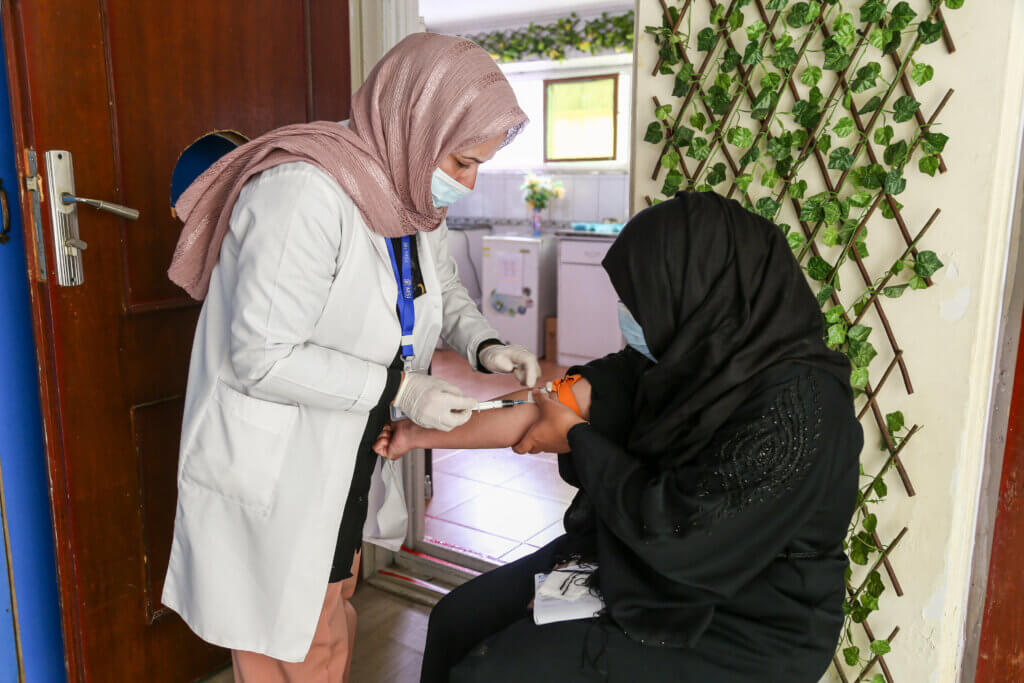
For now, this program has funding, but additional funding will be needed to continue protecting this critical part of Afghanistan’s healthcare system beyond 2026. The initiative ensures that women still have someone they can turn to when their health, and sometimes their lives, are at risk.
At MSI, innovation isn’t just about technology or new treatments. Sometimes it means finding careful, practical ways to keep lifesaving care within reach—even in the most challenging circumstances.